
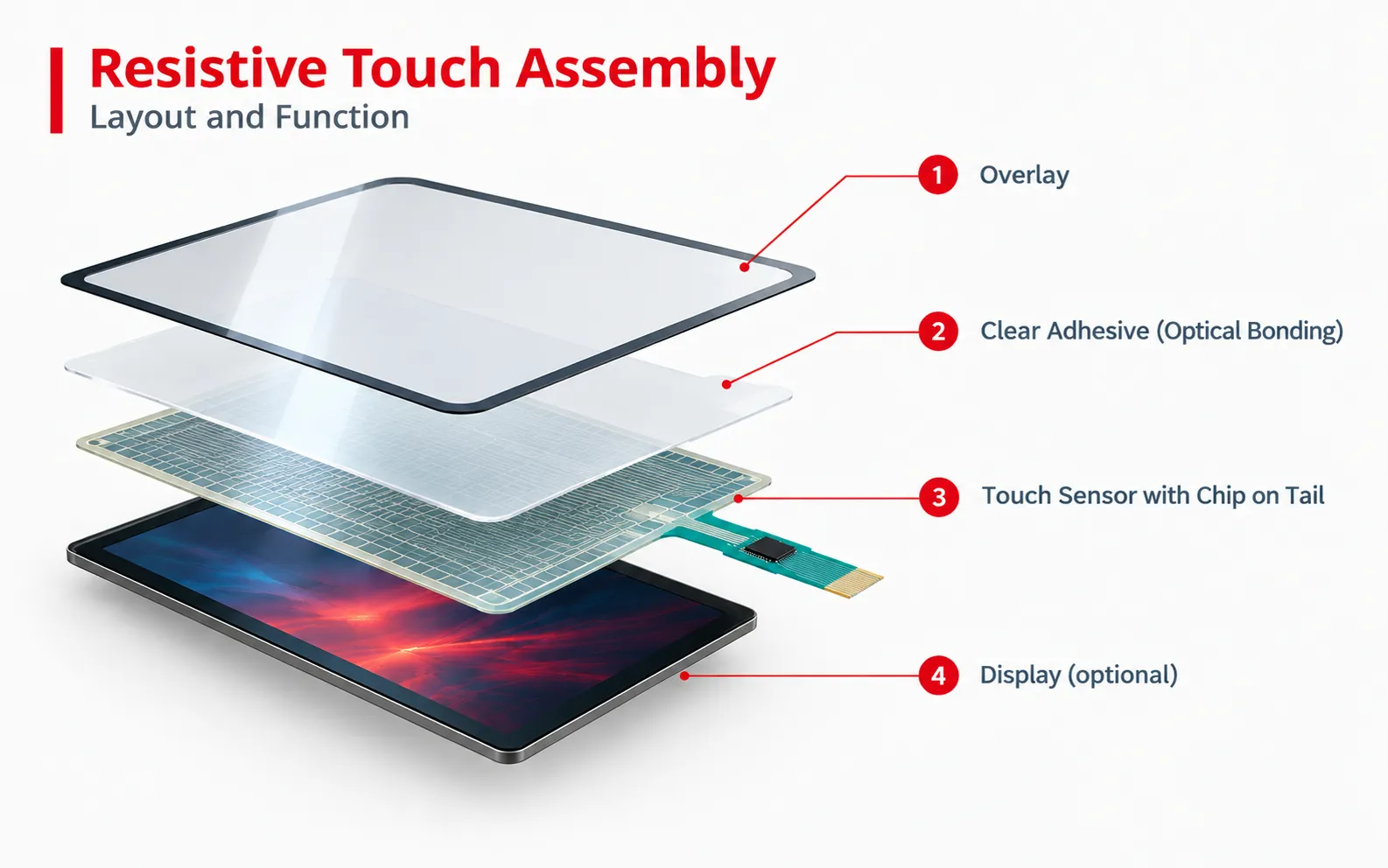
AI-generated Illustration

Resistive Touch Systems

robust and reliable

Resistive touch systems detect input through pressure on the surface, allowing them to be operated with fingers, gloves, or styluses. They are often used in harsh or humid environments where a cost-effective solution without gesture control is required.

At our production site in Buchen in the Odenwald region, Hoffmann + Krippner develops and manufactures custom resistive touch systems that operate reliably even under demanding conditions.

Send request

How a
Resistive Touch System Works and Is Built

A resistive touchscreen consists of two electrically conductive layers (usually ITO) that are brought into contact by pressure from a finger or stylus. At the point of contact, the circuit closes and a measurable voltage drop occurs. This allows the exact point of pressure to be determined and the function to be triggered.

Front foil: The flexible polyester film is fully sealed and can be custom printed using screen printing.

Adhesive layer: The front foil is bonded to the touch sensor using an adhesive frame or a highly transparent, full-surface bond via the OCA bonding process.

Touch sensor: Two conductive layers are separated by spacer dots and only come into contact under pressure to trigger the function.

Controller: The intelligence of the touchscreen is located directly on the connection tail of the resistive touchscreen (chip-on-flex) or on a separate PCB.

Your Resistive Touch System. Your Scope of Features.

From a simple resistive touchscreen to a fully integrated HMI solution:
You decide which functions and components your application needs.
We combine the right technologies and, on request, also handle the integration.

1. The Foundation of Your Resistive Touch System

  • Design Foil

    Polyester film with various surfaces, custom design, windows, or finishes

  • Touch sensor

    Standard or custom touch – from 4-wire to 8-wire or digital matrix touchscreens

  • Controller

    Touch controller on a separate PCB or integrated into the customer’s main board

2. Extend Your Resistive Touch System
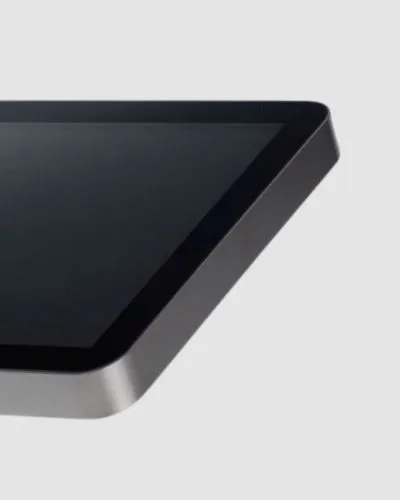
Display

The right display is selected based on the requirements of the application. Key criteria include the area of use (indoor or outdoor), temperature range, readability, and long-term availability. TFT displays (TN or IPS) as well as OLED displays are used – as standard or customer-specific solutions.
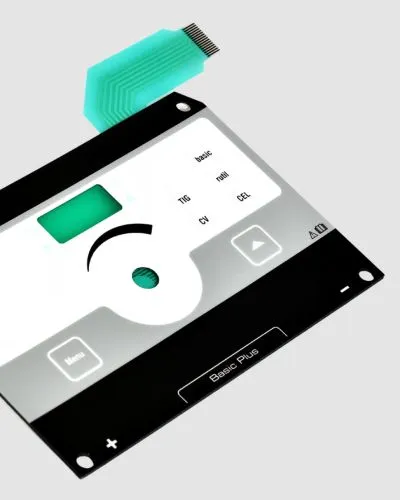
Buttons + Switches

Resistive touch systems can be enhanced with tactile membrane switches or emergency stop switches. Hybrid operating concepts combine the flexibility of a touchscreen with the reliable tactile feedback of physical controls. This keeps frequently used or safety-relevant functions quickly accessible and clearly operable at all times.
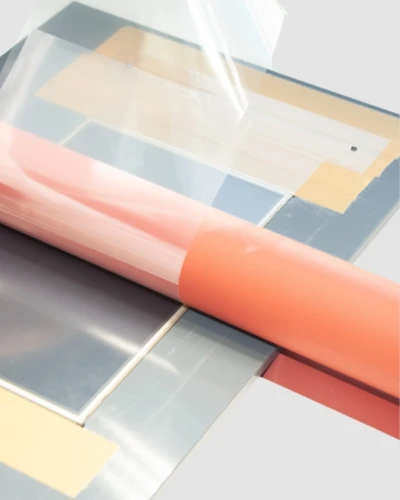
Optical bonding

In optical bonding, the display and resistive touch sensor are optically joined using OCA or LOCA adhesive. This reduces reflections, improves readability, and prevents the formation of condensation. The flexible front foil remains unbonded, preserving the pressure-based operation of the resistive touch system.
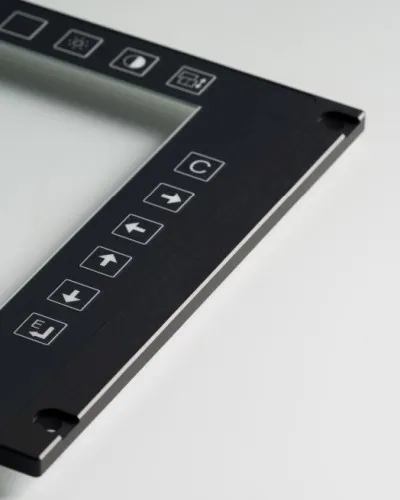
Housing + carrier

Integrating the touch system into a housing or carrier plate increases stability and simplifies installation in the customer’s application. Additional seals enable high IP protection ratings and ensure reliable function even in demanding environments.
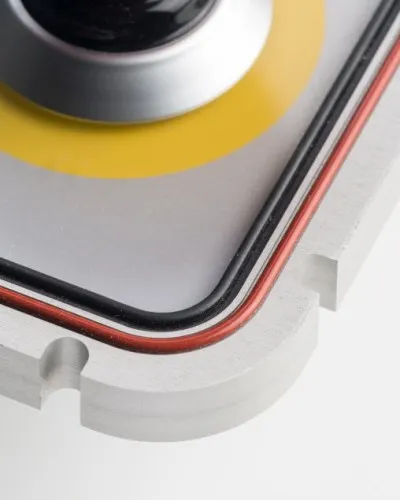
Seals

Custom sealing contours protect the resistive touch system from external influences. A wide variety of sealing materials and colors can be used.

3. Complete solution tailored to your requirements

You receive a 360° worry-free package: one solution, one point of contact!
We take care of the time-consuming coordination of many individual components and services for you.
You define the scope!

Operating unit

Buttons, touch, printed electronics, or a combination of multiple technologies.

Housing

Standard housing or a custom housing solution made of plastic or metal

Electronics

Custom-populated PCBs and LED technology for button backlighting.

Software

Intelligent user guidance or protocols for smooth data transmission

Connectivity

Custom interfaces and IoT connectivity for value-added HMIs

AI-generated Illustration

Design + Development

Quality + Sustainability

Typical Applications for Resistive
Touch Systems

Medical technology:

Safe operation of medical devices through targeted pressure

Mechanical engineering:

Machine control panels for operation with thick gloves

Hospitality:

POS and ordering systems for operation with fingernails, styluses, or wet hands

Logistics:

Rugged handhelds for outdoor use or warehouse environments

Individual solutions from Hoffmann + Krippner

Every project requires a precisely coordinated solution. We develop control units and sensor foils that are optimally suited to your application in terms of function, design and robustness – from technology selection to series production.

All services at a glance
Blick – download PDF here!

Graphic box elements for Hoffmann + Krippner

Capacitive or resistive – which
technology suits my project?

Capacitive touch systems are ideal
when design, multitouch, and
gesture control are top priorities.

Resistive systems offer advantages
when robustness, operational reliability, and cost sensitivity are required.

FAQ:

Frequently Asked Questions About Resistive Touch Systems

Can resistive touch systems support multitouch?
No, resistive touchscreens are designed for single-touch input only.
Multitouch is possible with capacitive systems (PCAP).

Use a soft microfiber cloth and mild cleaning agents (such as isopropyl alcohol or special display cleaners). Important: avoid pressing hard while wiping, and do not use abrasive cleaners or sharp objects, as this can scratch the top plastic film.

In a 4-wire system, the measurement layers age due to the constant stretching of the film, which means the screen must be recalibrated regularly. In the industrial 5-wire system, all measurement traces are protected on the rigid glass layer, allowing the sensor to remain permanently precise even under heavy wear.

This is due to the multi-layer construction. A resistive touchscreen consists of a flexible plastic front foil, an air gap, and a glass layer. These additional layers and the air in between reflect light and slightly reduce optical clarity.

Hoffmann + Krippner has been developing and manufacturing custom touch solutions “Made in Germany” for decades. Every resistive touch system is custom-made and can be tailored as an integrated specialty solution (full service) to the specific requirements of the application. From consulting to design and prototyping through to series production, Hoffmann + Krippner offers everything from a single source.

Start your project!

New development or redesign?
We are your partner from prototype to series production.