
Optical bonding

brilliant image

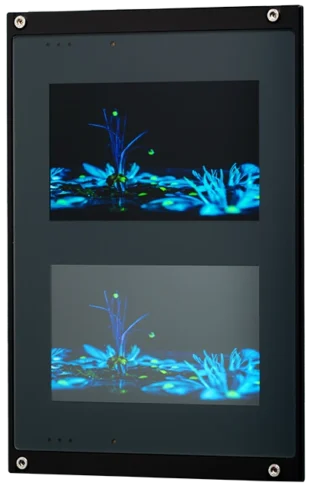
Optical bonding is the full-surface bonding of touchscreens, displays and glass. Usually, there is an air gap between a cover glass or a touchscreen and the display behind it. This causes the image to lose its brilliance and creates annoying reflections. Optical Bonding fills and eliminates the air gap with a high-quality transparent adhesive. This significantly reduces the reflections caused by light refraction.

Touch system with and without optical bonding

Optical bonding is the full-surface bonding of touchscreens, displays and glass. Usually, there is an air gap between a cover glass or a touchscreen and the display behind it. This causes the image to lose its brilliance and creates annoying reflections. Optical Bonding fills and eliminates the air gap with a high-quality transparent adhesive. This significantly reduces the reflections caused by light refraction.

LOCA or OCA bonding?

We rely on two proven bonding techniques for optical bonding. Liquid bonding, also known as LOCA, is used to bond rigid surfaces. Laminating with sheet adhesive, also known as OCA, can also be used to bond flexible surfaces. Both processes are carried out under clean room conditions to prevent air and dust inclusions.

The LOCA bonding process

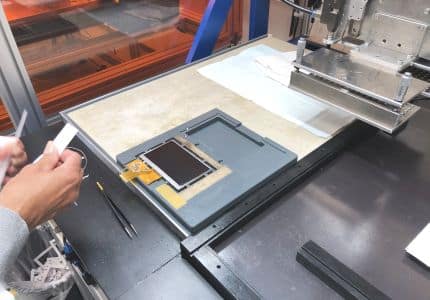
Employee sets up touchscreen for optical bonding

Place touch in device

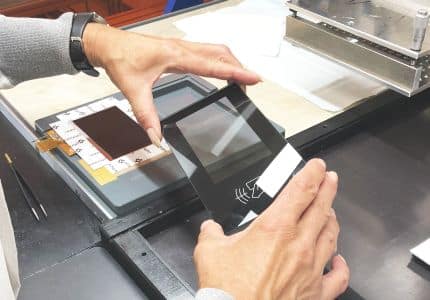
Woman lifts cover glass in hand

Check cover glass for impurities

Optical Bonding Production Process

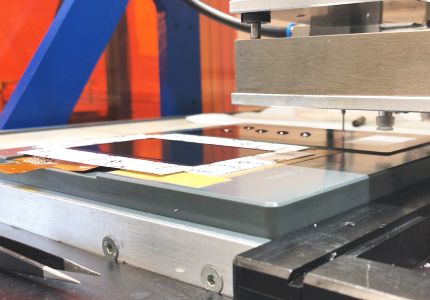
Set and marry liquid glue dots

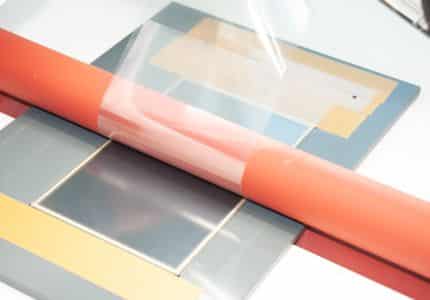
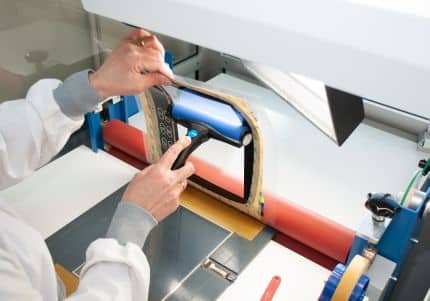
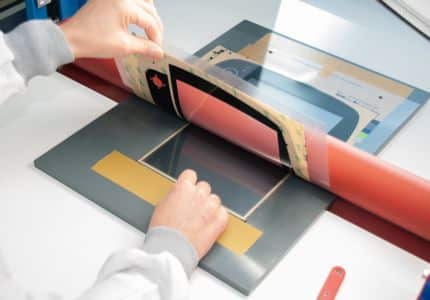
The OCA bonding process

"A rectangular wood pattern in orange and magenta, showing different tones and shades. The pattern is artfully designed and presented in a table."

Laminate foil adhesive onto display

Woman cleans foil with roller

Clean components

"Hand with thumbs up, car design in the background. Finger pointing to font with nail. Material properties and technology are presented. Symbol for publication."

Adhesive design film with display

Our optical bonding know-how

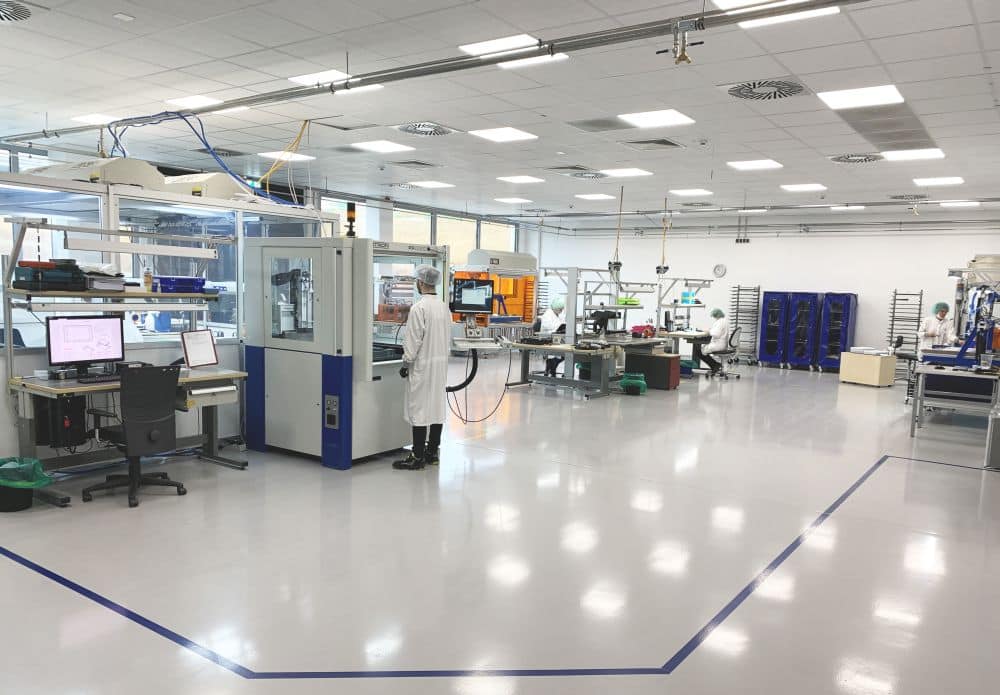
Hygiene and care have top priority in optical bonding. This is why we carry out the optical bonding process under clean room conditions. Special air conditioning and ventilation technology, protective clothing and airlocks ensure consistently high quality.

Liquid bonding (LOCA) in particular also requires in-depth expertise and experience for the optimum casting geometry and bonding quantity. Each new touch system or display unit requires an individually created casting program. A special joining technique is used to marry the components to be joined into a single unit.

The main challenge with lamination (OCA) lies in bubble-free bonding. The sheet adhesive is applied via rollers and all components are bonded together. Subsequently, any air bubbles can be eliminated using an autoclave.

Optical Boning production at Hoffmann + Krippner

Individual solutions from Hoffmann + Krippner

Every project requires a precisely coordinated solution. We develop control units and sensor foils that are optimally suited to your application in terms of function, design and robustness – from technology selection to series production.

All services at a glance
Blick – download PDF here!

Graphic box elements for Hoffmann + Krippner

Your advantages with optical bonding

Brilliant image

Usually, there is an air gap between a cover glass or a touchscreen and the display behind it. This causes the image to lose its brilliance and creates annoying reflections. Optical Bonding fills and eliminates the air gap with a high quality transparent adhesive. This significantly reduces the reflections caused by light refraction.

Optically bonded touch systems are thus also suitable for use in bright environments. The special adhesive technology Optical Bonding ensures a clear view of the display even in unfavorable lighting conditions.

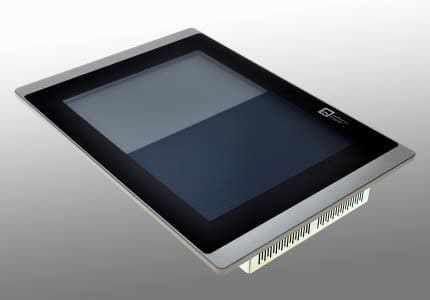
Touch system with housing
Robust & Safe

In addition to the brilliant image, bonded systems are much more robust when exposed to temperature fluctuations and mechanical stresses. Otherwise rather sensitive, they can now also be used in industrial applications and in outdoor areas.

This technology also satisfies additional safety aspects. If the glass does break, it does not shatter into a thousand individual parts; instead, the fully transparent liquid adhesive produces only fine cracks that minimize the risk of injury to the operator.

Better functionality

Optical bonding in combination with a capacitive touchscreen offers another advantage. By filling the air gap with a defined medium, namely the adhesive, the sensitivity of the capacitive input can be better adjusted. Otherwise, there is a risk that a mixture of water and air, for example, will accumulate in the air gap and impair the touch functionality.

Cleanliness

The adhesive also prevents dirt and moisture from penetrating the gap between the display and the touchscreen or cover glass, thus ruling out possible condensation. So a clouded view of your applications after a long period of system operation is no longer an issue.

Start your project!

New development or redesign?
We are your partner from prototype to series production.